James the Evil Stakeholder
 Click here and order your own copy of James the Evil Stakeholder!
Does your team struggle with stakeholders?
We are all familiar with that one difficult person, usually a manager or higher-up, with too much power and too little empathy, who makes the lives of the rest of the organisation a living hell.
James the Evil Stakeholder is a card game that teams can use to explore and discuss the various ways of dealing with stakeholders, especially difficult stakeholders. Or at least have a lot of fun about it!
The James can be an intimidating figure, but the fear we feel is of our own making. Dealing with The James is a question of facing your fear. And the best way to do that is by developing the right skills and standing strong with your team.
The bottom line is you can use your team skills to make difficult stakeholders play nice, both in the game and in real life.
On this page find:
Personas & Agile Factors
With 6 distinct personas, the game lets you explore different stakeholder attitudes in a fun and interactive way.
To deal with these personas, the game includes a variety of Responses, each with its own techniques and approaches you can use as a team to deal with these kind of situations. But also meant to inspire you to find your own way!
The Responses are divided into 6 Agile Factors, representing autonomy, purpose, skills, flow, empiricism and enjoyment. Of all the skills we've worked with, we find these to be the most effective to deal with The James.
Each Agile Factor is related to one of The James personas and each with their own colour: red, orange, yellow, green, dark blue and light blue.
Without further ado, here they are:
- The James, the capitalist, stubborn exploiter of autonomy
- The ability to make decisions and deal with the consequences leads to self-confidence. For a team with sufficient autonomy, a difficult stakeholder loses their power and becomes just another challenge to solve.
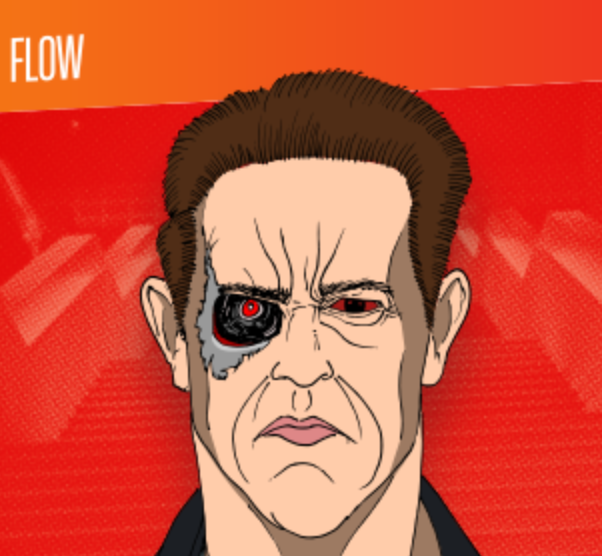
"You know you can make these decisions, and you're empowered to make them. Don't let anyone tell you how to do your work - you are the expert!" - The Terminator, the machine, orchestrator of Flow
- Flow is a state of mind were you are so focused on the task at hand that you lose track of time and become immune to distractions, including difficult stakeholders.
"Deep in the flow no disturbances will distract you from your work. You will race to the finish in record time!" - Einstein, the Subject Matter expert, paragon of Empiricism
- When you can support your decisions with data and facts, difficult stakeholders can no longer challenge your decisions.
"No guesswork done here. You measure, you know, you build and you measure again. This is the power of Science!" - Mother Teresa, the Prophet, preacher of Purpose
- When you are so clear about your purpose, you lose your fear and have no trouble ignoring difficult stakeholders.
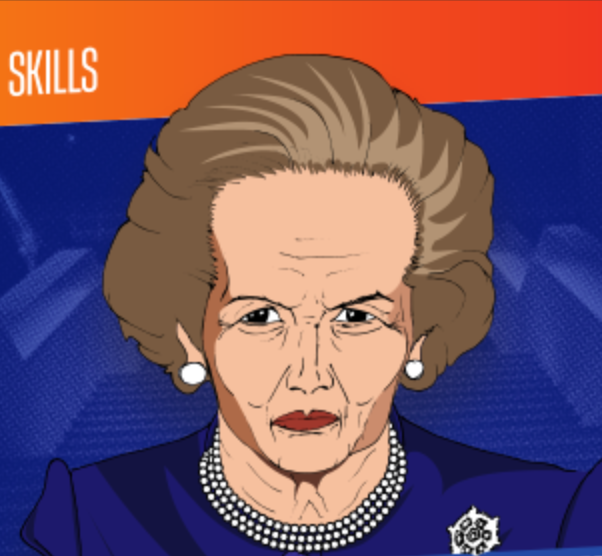
"This is why you're here! You know where you're going and what you need to do to get there, so don't let anyone distract you!" - Margaret, the Politician, wielder of Skills
- With both technical and soft skills you create an arsenal of options for dealing with difficult stakeholders.
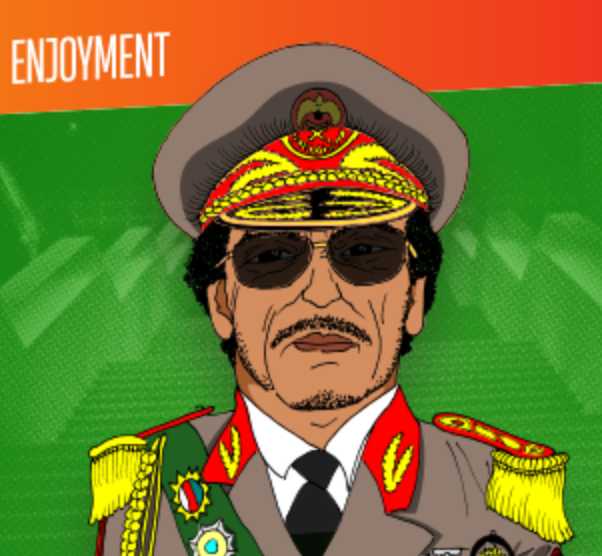
"You've trained long and hard for this, and you're the ones that make the magic happen!" - Gadaffi, the Dictator, fountain of Enjoyment
- When you enjoy the work you do, difficult stakeholders become just another challenge to laugh at, and fear evaporates.
"Doing the work with these people? It's the gift that keeps on giving!"



Using the cards for a Brainstorm session
This is what The James is all about, using the cards to collaboratively brainstorm and find solutions to dealing with difficult stakeholders.
- Separate The James cards from the Response cards, shuffle them, and put both decks on the table.
- Give each player 3 Response cards.
- Take the first The James card from the top of the deck, read the use case out loud, and place it face up on the table so that everyone can read it.
- Give the team some time to think about their Response cards and decide which one they think best addresses The James use case.
- One by one, each team member plays their Response card and explains how it would defuse The James in this particular use case.
- Once everyone has had their turn, discuss the Responses and agree on the best one. The goal is to create consensus and understanding.
Do note that this approach is just to get you started. Feel free to vary any way you like.
For example, you could take turns assuming the role of The James. You choose The James you want to play and defend your position against the Responses the rest of the team would use against you.
Or you could leave the Responses out all together and just discuss how you, as a team, would deal with each of The James use cases. The sky is the limit!
Using the cards for a fun game
This is a competitive game play you can play for laughs (or for money, or even stripping if you like, we don't judge). No heavy thinking or brainstorming, just play the cards and see who wins.
Perfect for a team outing, this is all about facing your fears of The James by playing with them. Repeatedly. 18 times in fact, because that is the number of The James cards in the deck!
The Setup
- Mix all the cards well into one deck, combining The James and Response cards. Don't be precious about it.
- The dealer gives each player 8 cards. That's your hand. The rest of the deck goes on the middle of the table - you will need them.
Playing
- The player left of the dealer plays a card, which sets the Agile Factor for the round.
- Going clockwise, all players play a card. Of the set Agile Factor if you want to win.
- The highest card of the set Agile Factor takes the round.
- The winner takes the cards played and keeps them to themselves. Stealing is an option but might make the game more physical than you would like.
- At the end of the round everyone takes cards from the deck so that they start the next round with 8 cards in their hands. Also a good moment to order beer or go for a pee.
- The winner of the round starts the next round.
The Winner
- Play until the deck is empty and nobody has any cards left. To find out who the winner is, add up the values of all the cards you won. The winner is the one with the most points.
Pro-level! Playing the Stakeholder
For the real The James Busters among you we have an extra dimension for the game, which you can add to the regular gameplay, making it more challenging and way more fun.
This variant really heroes The James, in all their horrible stakeholder grandeur, forcing you to play collaboratively as a team against them. But beware, for only one player can win the round! This means the game suddenly becomes a team effort, in a devious hawk-dove game kind of way.
- The James can be played at any time including as the first card. As soon as The James is played, the game is completely reset. What happened before ceases to matter.
- The goal of the game now becomes to beat The James card's value. Cumulatively, as a team: cards played after The James card are added up as they are played, irrespective of the suit.
- The player that plays the card that adds up to beat the value of The James wins the round.
- The round stops there even if not everyone has played. The winner starts the new round, just like in the normal gameplay. And yes, this means that towards the end of the game, some players will run out of cards before others and things will get weird.
- A player may play a The James on top of another The James card. If (and ONLY if) its value is higher than the original The James card, this again resets the game and becomes the new value to beat cumulatively, tediously starting from zero again. If it happens to be the last card in the round, you are home free and take the round. But remember, it has to be higher than the previous The James.
- If The James card is not higher than the previous The James, then its value simply adds up cumulatively with the rest of the cards. Making it pretty easy to win the round.
Thank you for playing!
While we spent a ridiculous amount of time designing this gameplay, we are convinced there are even more intricate, confusing, deliciously funny and utterly disrespectful ways to play it. So here's us challenging you to be creative.
And if you find something that you think is amazing, let us know! We will add it as an alternative gameplay on this page, immortilising your creativity forever!
Responses
In the Response cards we mention a variety of techniques that you can use to deal with difficult stakeholders. Here you will find an explanation of every technique, just in case you are not familiar with them.
a strategic roadmap for the company that outlines their goals and provides a detailed plan for achieving them in a specific time frame.
work completed according to the Definition of Done and ready to be released to the customer.
the process of preparing work to be picked up by the team.
allocating funding to long-lived, stable value streams, with the primary goal to provide financial autonomy and the flexibility needed to respond quickly to market changes and customer feedback, all within defined financial guardrails.
a philosophical theory that holds that all knowledge comes primarily or exclusively from sensory experience and observation. The scientific method is its best known implementation.
None Value Adding: a term from Lean that refers to an activity that does not add value.
a structured, collaborative process used to analyse and define a complex problem. It involves moving past surface-level symptoms to uncover the root causes. The main idea is that the quality of your solution is directly determined by the quality of your problem definition.
a line graph that helps understand the history or expected trajectory of key factors within a system over a given frame of time, often revealing patterns, trends, and correlations that are not immediately obvious.
a visual tool to categorise stakeholders according to their influence and interest in the team"s product.
a mental state in which a person is fully immersed in a feeling of energized focus, full involvement, and enjoyment in the process of performing an activity.
a visual tool that describes the user"s story of how they interact with the product, organised by the relative importance and complexity of the steps involved.
the last possible moment in which a decision can be made without any negative consequences.
a visual strategic plan that outlines the high-level goals, priorities, and progress of an initative over time. It is not a detailed project schedule or a list of tasks; rather, it is a strategic communication tool that explains the "Why" behind what is being built and where it is going.
a visual tool used to represent the cause-and-effect relationships among various elements, particularly focusing on the feedback loops that drive system behavior over time. It helps to break free from linear thinking and understand how interconnected factors create complex, dynamic patterns, often revealing why persistent problems occur or why interventions fail.
an activity where the team reviews the work completed during the sprint and discusses the high-level strategy for the product.
a statement that describes the reason for doing the work. It is a concise, high-level explanation of the Why. Purpose is one of the key elements of intrinsic motivation.